PRP — Platelet Rich Plasma
PRP is a procedure that involves concentrating platelets from your own blood to be reintroduced into the skin or scalp.
Platelets release bioactive and regenerative proteins upon injection, which initiates a regenerative process — encouraging new skin cell and blood vessel formation while improving the overall health of the dermal layers.
Over the following weeks and months, this delivers a ‘biological reset’ to the dermis, leading to healthier skin function, appearance and hair quality. For a range of skin and hair presentations, scientific literature and published clinical studies suggest PRP may help improve the appearance of fine lines, elasticity, tone and texture, and hair thinning including pattern hair loss.
Consultation & Pre-Procedure
Prior to a skin or hair PRP procedure, a consultation with AHPRA-registered medical practitioners (Registered Nurse and prescribing Doctor) is required to assess each individual's clinical situation, discuss benefits, risks, suitability and alternative options. PRP is only prescribed and administered under the supervision of a medical practitioner.
Results vary between individuals, outcomes are not guaranteed and not all individuals will be suitable candidates.
The causes for hair loss are complex, and review by a GP or Dermatologist to exclude metabolic causes is the best first step. Once nutritional deficiencies and metabolic function have been checked, then a consultation can be booked.
You will be asked to follow a specific pre-procedure protocol for 7–14 days prior to the procedure, which will be discussed by the accredited Alocuro medical practitioner. You will also complete a questionnaire to assess medical suitability for a PRP skin or hair treatment prior to the procedural booking.
The Treatment
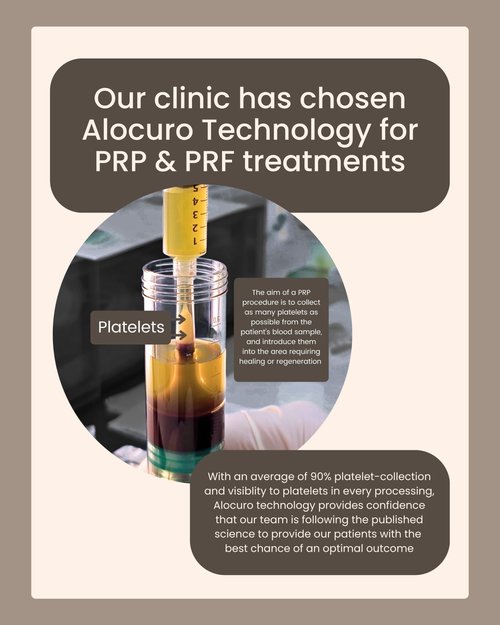
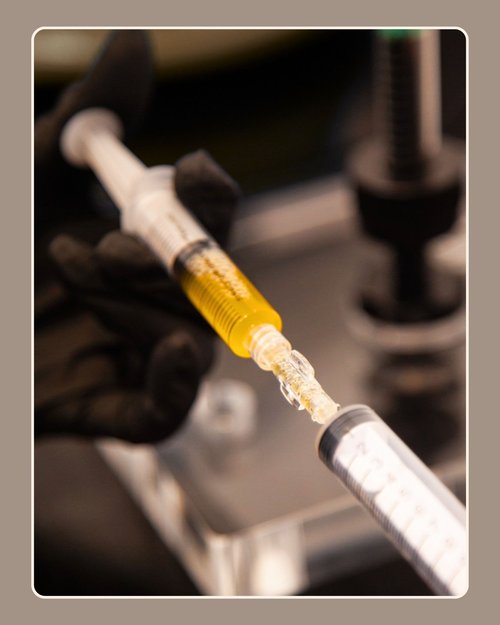
The treatment involves taking a small sample of blood, processed on site using an ARTG-listed Alocuro platelet-concentrating medical device (centrifuge) to collect an average of 90% of platelets from your blood sample, along with some plasma. This platelet-rich plasma is then injected into skin areas assessed to be suitable for treatment.
A topical local anaesthetic is used to minimise pain, however it is normal to be slightly painful when the plasma is injected and activating beneath the skin.
For best results, a treatment plan of 3 sessions is recommended, 4 weeks apart.
Book Online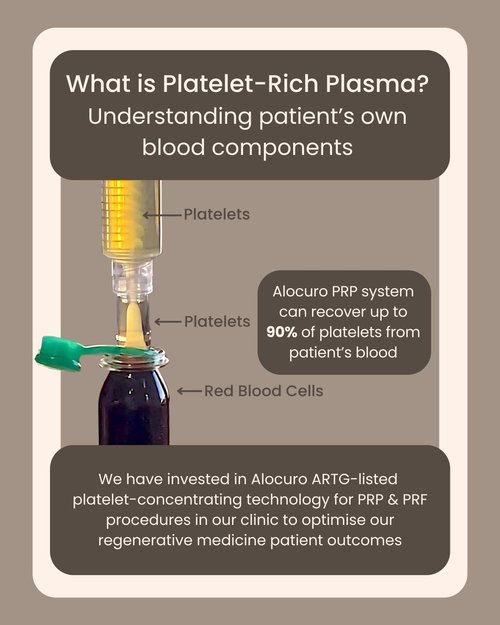
What to Expect After Treatment
Every patient is different, but most will have some skin redness at the completion of the procedure. Some patients will also feel a subtle warmness, tingling or tightness under the skin. This is normal and is a sign that the platelet-released proteins have initiated the ‘first phase of regeneration’. The warmness and tightness usually lasts up to 24 hours. Depending on the injection technique in the deeper folds and around the eyes, subtle puffiness under the skin may last up to 3 days.
TGA Listed
The Alocuro PRP systems meet current TGA guidelines for blood products, designed for single-session use by practitioners. ARTG (230415).
Contraindications & Risks
Contraindications
If you are pregnant or breastfeeding, PRP cannot be performed.
Risks & Possible Side Effects
- Redness on the day of treatment, up to 48 hours
- Bruising, swelling or puffiness
- Pain & discomfort
Post Procedure Care
It is advised to best protect the treatment area for approximately 7 days with minimal harsh weather exposure, sun, makeup, actives or acids, and strong skin products. No other facial procedures should be performed for at least 2 weeks. Avoid alcohol, exercise and sauna for 48 hours post procedure.
Potential Risks & Complications
With skin penetration, cannulation or venepuncture, there is a risk of infection, bleeding and nerve damage. As the blood vessels are very superficial, there is also the risk of bruising.
This information is provided for education and does not replace a consultation with a qualified health practitioner to assess your individual suitability for treatment, procedure risks, and alternative management options — which may include no treatment.
Frequently Asked Questions
Is PRP Safe?
Because the PRP is extracted from your own blood, there is no risk of disease transmission, allergic or immune reaction. However, all procedures carry some risk and these will be discussed in consultation prior to booking of treatment as part of the Informed Consent process, by the treating clinician.
As with all cosmetic and medical procedures, there are certain health conditions that will exclude patients. The outcome and suitability may differ per individual, and results may differ per individual.
How to Choose a Reliable PRP Therapy?
Please note that not all PRP injections are equal. We strongly advise that patients seeking this type of therapy ask the clinic they are planning to attend what type of PRP medical device they are using, whether it is TGA approved, and what concentration of PRP it provides.
Many PRP devices produce a PRP concentration only slightly higher than the concentration found in whole blood. Those products should not be marketed as PRP, as leading international researchers state that to be called PRP, the plasma extract should have a platelet concentration of at least 3 times the concentration level found in the patient's blood.
The system enables clinicians to create customised PRP concentrations, with high efficiency (average 90% platelet concentration) for patient-specific treatments.
Does It Hurt?
A local anaesthetic cream or gel is typically used to numb the skin. A very fine needle is used to inject the PRP and the injection itself may be slightly uncomfortable. As the PRP injection is intended to produce an inflammatory and healing response, most patients can expect the injected area to feel slightly tender and warm for the first day after the procedure.
Please note that no ice, steroidal, or non-steroidal anti-inflammatory medication (eg. Nurofen, Ibuprofen) should be used for 7 days post procedure as it can interfere with the healing response.
Ready to Discover PRP?
Book a consultation to learn how PRP can support your skin and hair health goals.